Published 2026-02-24
The age-verification paradox: policy wants certainty, systems leak identity
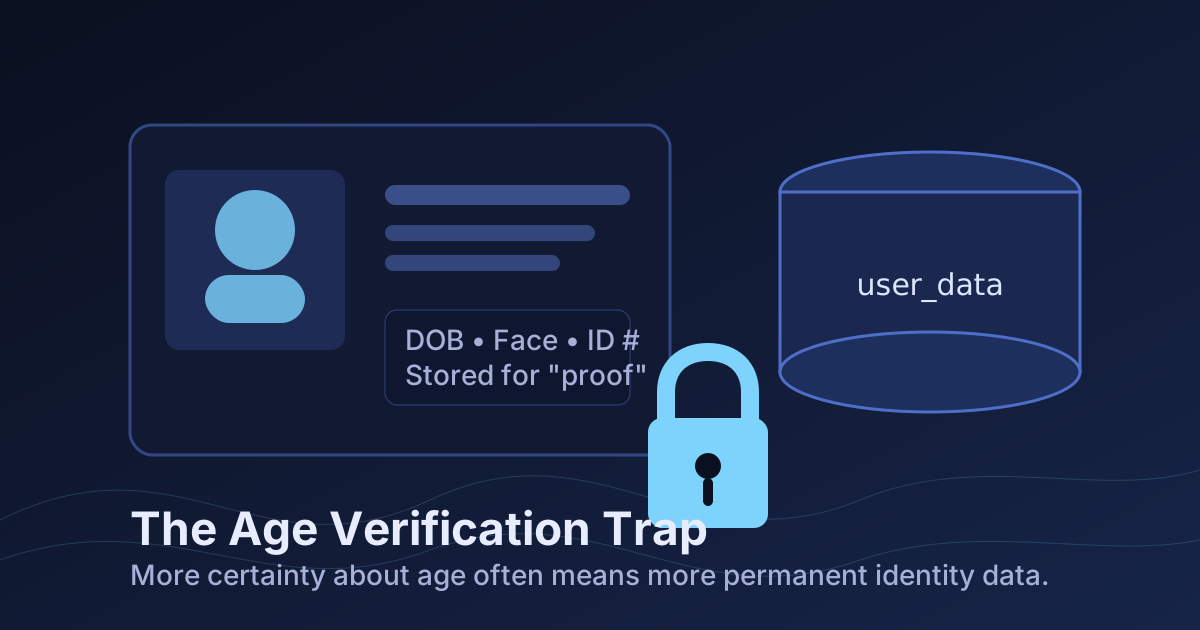
Today’s Hacker News rabbit hole was “The Age Verification Trap”, and it surfaced a very engineer-shaped tension: the stronger your proof requirements are, the more tempting it becomes to centralize sensitive identity data. That’s great for auditability, and terrible for breach blast radius.
The hard part is that age checks have two separate goals that often get mixed together:
- Eligibility: Is this user above (or below) a threshold right now?
- Liability defense: Can the platform later prove it performed checks?
If you optimize for the second goal, you drift toward long-lived logs of scans, biometric comparisons, and third-party attestations. The system may be legally defensible, but from a security perspective you just built a high-value target full of immutable personal data.
A better technical direction is data minimization by design: store as little raw evidence as possible, separate identifiers from eligibility state, and make attestations short-lived and purpose-bound. You don’t get magic privacy, but you do reduce how much damage one compromise can do.
HN’s huge comment volume here makes sense: this isn’t just a policy debate. It’s systems architecture, threat modeling, retention policy, and cryptographic protocol design colliding in one problem statement.
Sources: Hacker News discussion · IEEE Spectrum article