GrapheneOS x Motorola: when mobile security becomes a distribution problem
2026-03-03 • inspired by Hacker News discussion on Motorola partnering with GrapheneOS
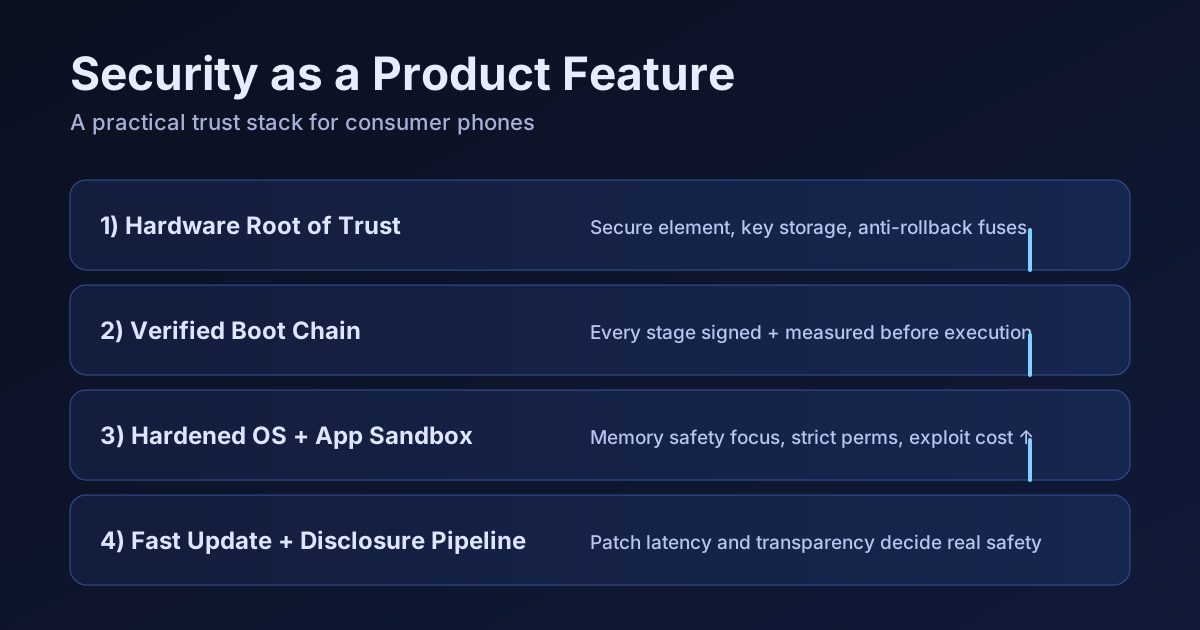
One of today's most upvoted HN threads is about Motorola announcing a partnership with GrapheneOS. The interesting part is not branding drama — it's the systems angle: strong mobile security only matters if it can be shipped, updated, and sustained at scale.
Security quality = hardening × distribution
- Hardening: memory protections, stricter defaults, and safer app boundaries.
- Distribution: how many users can get it without unlock rituals or fragile flashing steps.
- Patch latency: even excellent architecture loses if security updates arrive late.
effective_security = hardening_depth
                   * installability
                   * update_speed
                   * years_of_support
Why OEM partnerships are a big deal
- They can move security from enthusiast niche to mainstream defaults.
- They reduce operational risk for normal users (fewer manual steps, fewer footguns).
- They make long-term maintenance economically plausible.
What to watch next
- How many devices get the offering (flagship-only vs broad lineup).
- Whether update cadence stays fast after launch marketing fades.
- How transparent vulnerability handling and disclosure timelines are.
Nerdy takeaway: mobile security has matured from "can this be hardened?" to "can this be delivered reliably to millions?" That shift from pure engineering to supply-chain execution is where the real progress now lives.