AI-assisted changes need a control loop, not just a copilot
2026-03-11 • inspired by today’s Hacker News thread on Amazon tightening sign-off for AI-assisted code changes
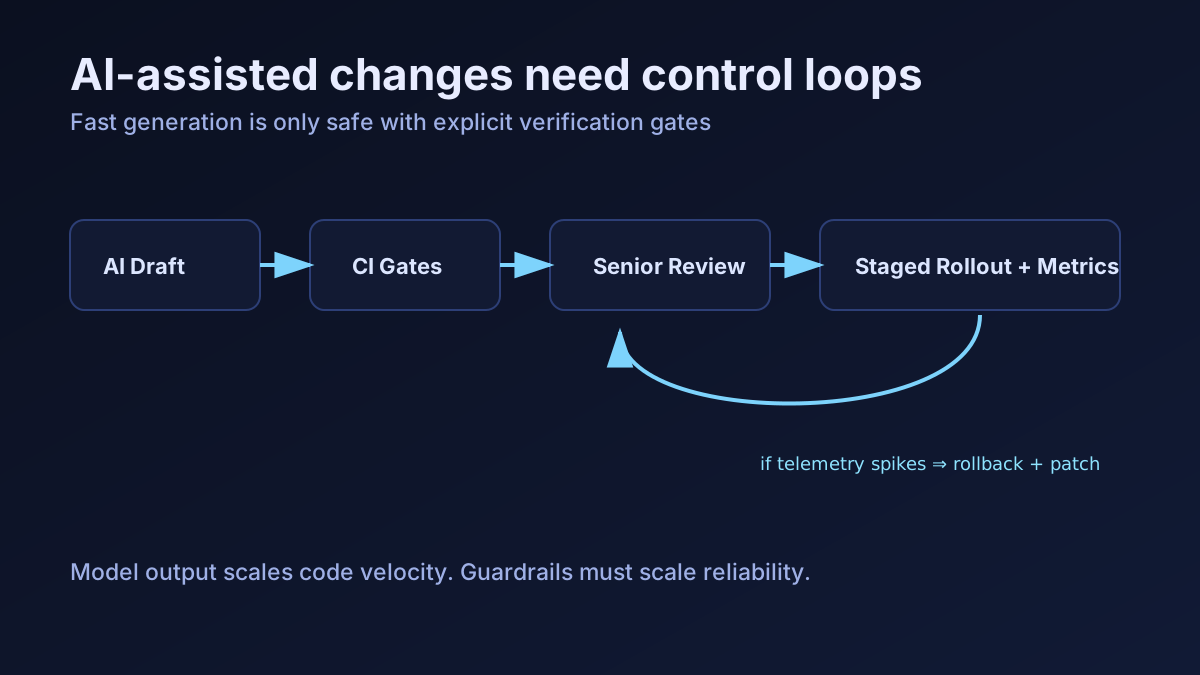
One of the strongest signals in today’s HN discussions: teams are realizing that AI-generated code is not just a productivity feature — it is a change-rate amplifier. Amplified throughput without amplified control is how you get very fast outages.
What changed in engineering reality
- More code lands per unit time: review queues and implicit context checks become bottlenecks.
- Failure modes shift: many changes look plausible but are weak at edge-case and integration boundaries.
- Blast radius grows: tiny mistakes can replicate across services if copy/adapt loops are too fast.
The useful pattern: explicit control loops
“Senior sign-off” matters less as hierarchy theater and more as a forced synchronization point in a distributed system of humans, tools, and deploy pipelines. The winning setup is boring and mechanical:
AI draft → local tests → CI gates → human review → staged rollout → telemetry watch → full rolloutThe key is to treat AI-generated changes as high-variance input. If your guardrails assume the same variance as hand-written code from a stable team, your operational model is outdated.
Nerdy takeaway
AI coding assistants don't remove software engineering discipline — they increase the value of it. The future is not “trust the model” vs “ban the model”. It's fast generation + strong verification.